
Българска история
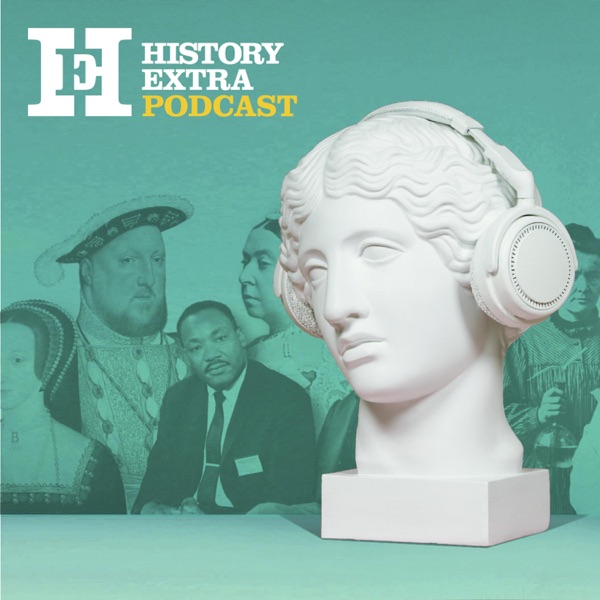
From the middle of the 19th century, Chinese people in the United States found themselves increasingly policed, as legislation was introduced that contained and controlled their economic and cultural lives. Historian Beth Lew-Williams tells Elinor Evans about her work uncovering this wide-reaching set of laws for her book John Doe Chinaman, and reveals how Chinese people resisted and avoided discrimination. Beth’s book is a finalist for the 2026 Cundill History Prize – you can find more details at cundillprize.com. ––––– GO BEYOND THE PODCAST To find out more about the Chinese Exclusion Act, read this article: https://bit.ly/4ik36NB ----- PRESSURE LIVE PODCAST Join us tomorrow, Thursday, 22 October, for a live episode of the HistoryExtra podcast exploring the history behind recent WWII drama PRESSURE – the gripping untold story behind D-Day. We’ve teamed up with STUDIOCANAL for a special event at the Royal Society of Arts in London, to celebrate the film’s upcoming Home Premiere. The event features David…
From the middle of the 19th century, Chinese people in the United States found themselves increasingly policed, as legislation was introduced that contained and controlled their economic and cultural lives. Historian Beth Lew-Williams tells Elinor Evans about her work uncovering this wide-reaching set of laws for her book John Doe Chinaman, and reveals how Chinese people resisted and avoided discrimination. Beth’s book is a finalist for the 2026 Cundill History Prize – you can find more details at cundillprize.com. ––––– GO BEYOND THE PODCAST To find out more about the Chinese Exclusion Act, read this article: https://bit.ly/4ik36NB ----- PRESSURE LIVE PODCAST Join us tomorrow, Thursday, 22 October, for a live episode of the HistoryExtra podcast exploring the history behind recent WWII drama PRESSURE – the gripping untold story behind D-Day. We’ve teamed up with STUDIOCANAL for a special event at the Royal Society of Arts in London, to celebrate the film’s upcoming Home Premiere. The event features David…
From the middle of the 19th century, Chinese people in the United States found themselves increasingly policed, as legislation was introduced that contained and controlled their economic and cultural lives. Historian Beth Lew-Williams tells Elinor Evans about her work uncovering this wide-reaching set of laws for her book John Doe Chinaman, and reveals how Chinese people resisted and avoided discrimination. Beth’s book is a finalist for the 2026 Cundill History Prize – you can find more details at cundillprize.com. ––––– GO BEYOND THE PODCAST To find out more about the Chinese Exclusion Act, read this article: https://bit.ly/4ik36NB ----- PRESSURE LIVE PODCAST Join us tomorrow, Thursday, 22 October, for a live episode of the HistoryExtra podcast exploring the history behind recent WWII drama PRESSURE – the gripping untold story behind D-Day. We’ve teamed up with STUDIOCANAL for a special event at the Royal Society of Arts in London, to celebrate the film’s upcoming Home Premiere. The event features David…
This episode explores the extraordinary life of Juba II, from his traumatic childhood as a captive during Julius Caesar's 46 BC triumph to his rise as a scholarly king. The discussion details his unexpected adoption into Caesar's household and his eventual reign over the kingdom of Mauritania alongside Cleopatra Selene. The narrative also examines the broader Roman Empire, focusing on how Roman identity was defined by citizenship and culture rather than ethnicity. Through an analysis of ancient theories like environmental determinism and the use of archaeological evidence, we uncover the multicultural nature of a civilization that spanned from Britain to the Sahara.
This episode explores the life and trial of Crispina Perez, a powerful 17th-century slave trader in the West African port of Cushu, who was arrested by the Portuguese Inquisition for heresy. The discussion delves into the social structure of Cushu, highlighting the significant role of women in local commerce and the mixed-heritage population that shaped the town's identity. The episode also examines the multi-faith, cosmopolitan nature of 17th-century Kashio, detailing how Catholicism, Islam, and African religious practices coexisted. The discussion covers the town's social life, including food staples like rice and the impact of Atlantic trade, as well as the tragic trial and deportation of Crispina Perez.
Historian Erin McGlock discusses her book 'Presence', exploring the historical roles of 'searchers' during the plague and the practice of 'nidgeting' in East Anglian childbirth. The conversation traces the transition from female-led midwifery to institutionalized, male-dominated obstetric practices and examines early modern medical beliefs regarding pregnancy, including theories of ensoulment, maternal emotions, and astrology. McGlock also addresses the methodological challenges of writing about historical women whose lives are known only through fragments. She describes her approach of using these disparate voices to create a 'chorus' that reconnects modern readers with forgotten histories of the female body.
Historian Judith S. Lewis discusses how British country houses were repurposed for various war efforts, including intelligence activities and military headquarters like Wilton House. The episode explores the changing roles of upper-class women entering military service and the complex social dynamics involving requisitioned properties and emigre servants. The discussion further examines how Jewish refugees provided essential domestic staff and the role of the Special Operations Executive in using these houses for training. Finally, it covers the post-war transformation of many estates into public heritage sites or commercial ventures.